Baking & Desserts Classic Vanilla Butter Cake
Highlighted under: Cakes, Cookies & More
I love making this Classic Vanilla Butter Cake when I want to bake something that delights everyone. The rich vanilla flavor and light, buttery texture come together beautifully to create a cake that's perfect for any occasion. Whether it's a birthday celebration or a simple family gathering, this cake never fails to impress. My favorite part is how easily it comes together with just a few simple ingredients, making it a go-to recipe for both novices and experienced bakers alike.
As I embarked on making my Classic Vanilla Butter Cake, I decided to experiment by using high-quality vanilla extract to really bring out that classic flavor. I was pleasantly surprised at how the taste transformed with just this small tweak. Each slice was bursting with that warm, nostalgic vanilla essence that elevates this cake far beyond standard recipes.
While baking, I found that cream and butter should be at room temperature to ensure a smooth batter, which helps the cake rise better. This technique really maximizes the fluffiness, giving the cake a delightful texture that pairs perfectly with frosting or just a simple dusting of powdered sugar.
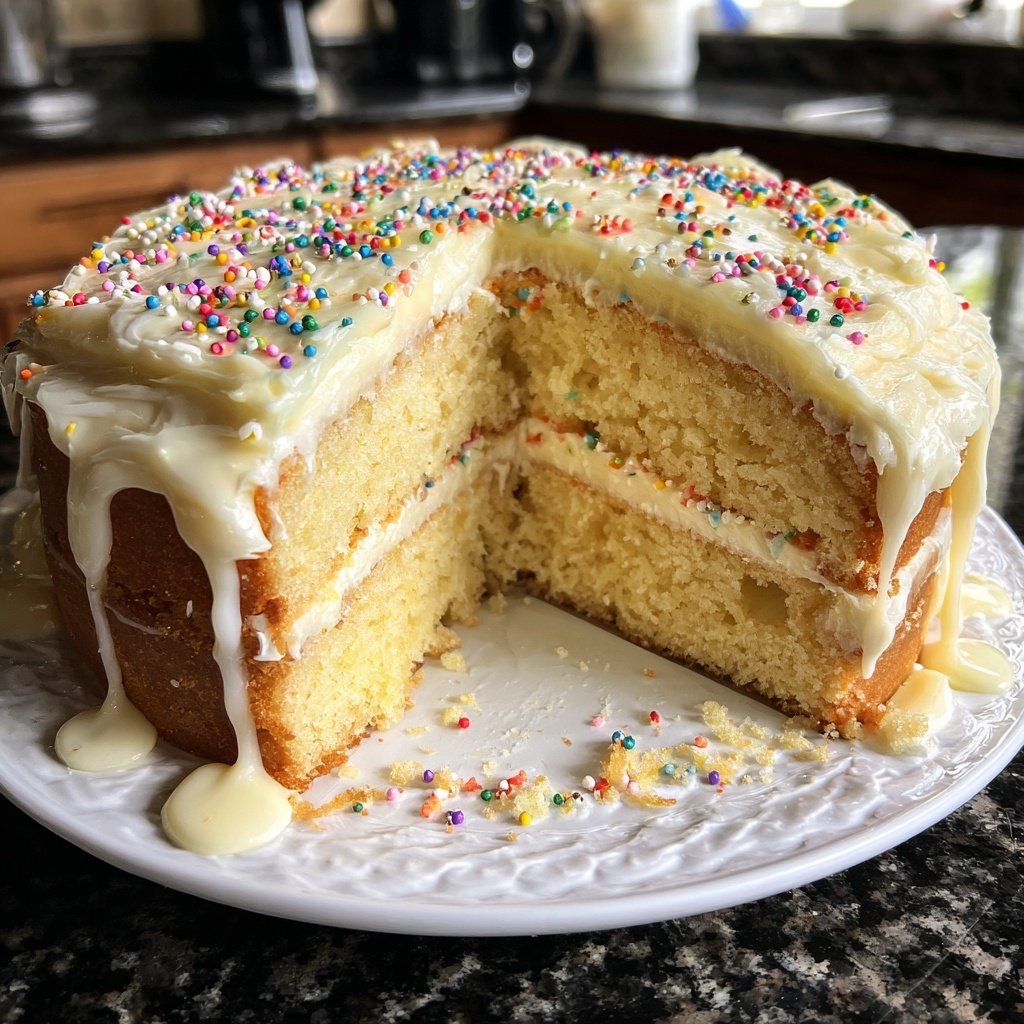
Why You Will Love This Recipe
- Rich, moist texture that stays fresh for days
- Endless possibilities for customization with frostings and toppings
- Simple ingredients that yield professional-quality results
Understanding the Ingredients
Each ingredient in this Classic Vanilla Butter Cake plays a crucial role in its overall texture and flavor. The unsalted butter not only contributes to the moistness but also allows for better control over the saltiness in your cake. Make sure to use high-quality vanilla extract for a deeper, more aromatic flavor. While some might be tempted to use margarine for a lighter option, the butter's fat content is essential for achieving that rich, decadent taste.
The eggs serve as a binding agent and are vital for helping the cake rise. It's important to use room temperature eggs; they'll mix more easily with the butter and sugar, ensuring a smooth, homogenous batter. If you're considering a dairy-free version, substitute the milk with almond or oat milk and consider replacing the eggs with aquafaba or a commercial egg replacer to maintain the structure.
Flour is the backbone of the cake, and all-purpose flour is a great choice here. It provides a good balance of protein, contributing to the cake's structure without making it tough. For those avoiding gluten, using a gluten-free flour blend can work, but it's advisable to add a bit of xanthan gum to achieve a similar texture.
Baking Tips for Success
When mixing the batter, it's crucial to follow the order of operations: cream the butter and sugar first until light and fluffy. This process incorporates air into the mixture, allowing the cake to rise beautifully in the oven. Avoid over-mixing once you add the flour, as doing so can toughen the cake. Mix just until you see no dry flour remaining; small lumps are perfectly fine.
Pay attention to the baking time; ovens can vary significantly. While the recipe suggests 30 minutes, start checking a few minutes early. Using a toothpick inserted in the center, ensure it comes out clean or with a few moist crumbs. If it comes out with wet batter, give it an additional 2-5 minutes, but avoid baking it too long to keep that moist texture.
Letting the cake cool in the pan for 10 minutes is essential for structural integrity. If you attempt to transfer it too soon, it might break apart. After the initial cooling, transferring to a wire rack allows for air circulation, preventing the bottom from becoming soggy. If you’re not serving it the same day, it can be wrapped tightly to maintain freshness.
Serving and Storing Your Cake
This cake is wonderfully versatile when it comes to serving options. You can enjoy it as-is with a light dusting of powdered sugar or go the extra mile with a rich buttercream frosting, whipped cream, or a simple glaze. Fresh fruits like berries pair beautifully; they add a burst of freshness that balances the cake's sweetness, making it a delightful addition for gatherings.
For storage, this butter cake stays moist for several days when stored in an airtight container at room temperature. If you’d like to extend its shelf life, consider freezing slices. Wrap each slice individually in plastic wrap and place them in a freezer-safe bag for up to three months. Thaw them in the refrigerator overnight, and they will taste almost as fresh as the day they were baked.
Additionally, if you're interested in experimenting with flavors, this base recipe is perfect for infusing different elements. Consider adding citrus zest, chocolate chips, or even swapping half of the vanilla for almond extract to create a unique twist. These small adjustments can elevate this classic cake into your signature dessert.
Ingredients
Gather the following ingredients before you start:
Vanilla Butter Cake Ingredients
- 1 cup unsalted butter, softened
- 2 cups granulated sugar
- 4 large eggs
- 1 tablespoon pure vanilla extract
- 3 cups all-purpose flour
- 1 tablespoon baking powder
- 1/2 teaspoon salt
- 1 cup milk
Make sure you have everything ready before proceeding to the next steps.
Instructions
Follow these easy steps to create your perfect cake:
Preheat the Oven
Preheat your oven to 350°F (175°C) and grease and flour a 9x13-inch baking pan.
Cream Butter and Sugar
In a large bowl, beat the softened butter and granulated sugar together until light and fluffy.
Add Eggs and Vanilla
Add the eggs one at a time, mixing well after each addition, along with the vanilla extract.
Combine Dry Ingredients
In another bowl, whisk together the flour, baking powder, and salt.
Mix the Batter
Gradually add the dry ingredients to the butter mixture, alternating with the milk until just combined.
Pour and Bake
Pour the batter into the prepared pan and bake for 30 minutes, or until a toothpick inserted in the center comes out clean.
Cool and Serve
Allow the cake to cool in the pan for 10 minutes, then transfer to a wire rack to cool completely before frosting or serving.
Now you can decorate your cake as desired or enjoy it plain!
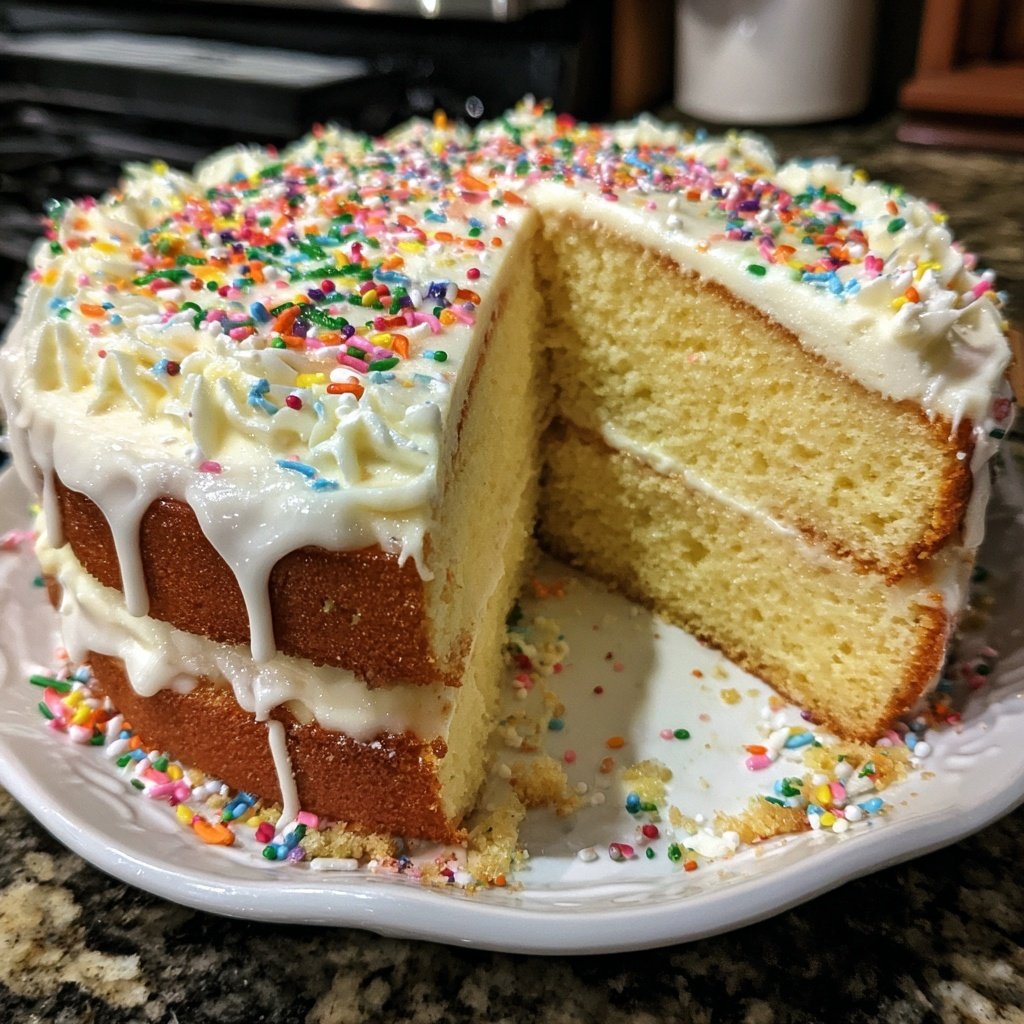
Pro Tips
- For an extra flavor boost, try adding lemon zest or almond extract to the batter.
Troubleshooting Common Issues
If your cake domes too much during baking, it could be a sign that your oven temperature is too high. Use an oven thermometer to ensure accurate readings, and consider lowering the temperature by 25°F (about 14°C) for a more even bake. For cakes that sink after baking, this can often be attributed to underbaking or too much mixing. Always err on the side of caution and check for the clean toothpick test before removing the cake from the oven.
Another common issue is the cake being too dry. This usually results from overbaking or not enough moisture during preparation. Keep an eye on the timer as ovens can have wide variances. If your cake does turn out dry, consider serving it with a syrup or sauce, or incorporating it into a trifle to add moisture and flavor layers.
Lastly, if you notice a dense texture, it’s often due to overmixing after adding the flour. Gentle folding with a spatula after the dry ingredients are added helps maintain the right airiness in the batter. Always mix just until incorporated to achieve that light, fluffy cake texture.
Scaling the Recipe
Scaling this Vanilla Butter Cake recipe can be a breeze once you know the basic ratios. For a smaller cake, consider halving the ingredients and using an 8-inch round pan. Adjust baking time to around 25 minutes, checking for doneness with a toothpick. Alternatively, to make a larger batch, doubling the ingredients is simple; just ensure to use at least a 12x18-inch sheet pan and extend the baking time accordingly.
If you're thinking of hosting a larger gathering, you can create layered cakes using this recipe. Simply divide the batter among three or four round pans, and the bake time will roughly remain the same, with a few extra minutes as needed. Just keep a close eye on the cakes as they bake; the glossy surface and golden edges are great indicators for doneness.
When scaling, consider the mixing equipment you have available. A larger mixing bowl and a stand mixer may be necessary for big batches to maintain the emulsification of your batter. Also, make sure your oven can accommodate your chosen batter size by ensuring there’s enough space for air circulation during baking.
Creative Variations
While this Classic Vanilla Butter Cake serves as an excellent base, there’s no limit to how you can customize it. For a seasonal twist, try adding pumpkin puree and spices for a fall-inspired cake. You could also fold in bits of toffee or nuts for added texture along with a drizzle of caramel sauce on top to elevate the flavor profile.
An option for chocolate lovers is to create a chocolate marble effect. Take half of the batter before it's fully mixed and add cocoa powder or melted chocolate. Swirl this mixture into the vanilla batter before baking. This not only elevates the taste but also adds an incredible visual appeal to your cake.
For a refreshing summer dessert, incorporate citrus zest, like lemon or orange, into your batter. It brightens the flavor, making it perfect for warm-weather gatherings. Top with a simple citrus glaze, and you'll have a delightful cake that surprises and delights your guests with every slice.
Questions About Recipes
→ Can I use salted butter instead of unsalted?
Yes, but if you do, you may want to reduce the added salt in the recipe.
→ What can I substitute for eggs if I want a vegan option?
You can use flaxseed meal mixed with water, or commercially available egg replacers.
→ How should I store leftover cake?
Store it in an airtight container at room temperature for up to 3 days or refrigerate for up to a week.
→ Can I freeze the cake?
Yes, wrap it tightly in plastic wrap and foil. It can be frozen for up to 3 months.
Baking & Desserts Classic Vanilla Butter Cake
Created by: Lucy Bennett
Recipe Type: Cakes, Cookies & More
Skill Level: Easy
Final Quantity: 1 cake
What You'll Need
Vanilla Butter Cake Ingredients
- 1 cup unsalted butter, softened
- 2 cups granulated sugar
- 4 large eggs
- 1 tablespoon pure vanilla extract
- 3 cups all-purpose flour
- 1 tablespoon baking powder
- 1/2 teaspoon salt
- 1 cup milk
How-To Steps
Preheat your oven to 350°F (175°C) and grease and flour a 9x13-inch baking pan.
In a large bowl, beat the softened butter and granulated sugar together until light and fluffy.
Add the eggs one at a time, mixing well after each addition, along with the vanilla extract.
In another bowl, whisk together the flour, baking powder, and salt.
Gradually add the dry ingredients to the butter mixture, alternating with the milk until just combined.
Pour the batter into the prepared pan and bake for 30 minutes, or until a toothpick inserted in the center comes out clean.
Allow the cake to cool in the pan for 10 minutes, then transfer to a wire rack to cool completely before frosting or serving.
Extra Tips
- For an extra flavor boost, try adding lemon zest or almond extract to the batter.
Nutritional Breakdown (Per Serving)
- Calories: 380 kcal
- Total Fat: 26g
- Saturated Fat: 15g
- Cholesterol: 195mg
- Sodium: 85mg
- Total Carbohydrates: 32g
- Dietary Fiber: 3g
- Sugars: 24g
- Protein: 6g