Blueberry Lemon Sourdough Bread
Highlighted under: Cakes, Cookies & More
Blueberry Lemon Sourdough Bread
Blueberry Lemon Sourdough Bread
Blueberry Lemon Sourdough Bread

The Importance of Starter Quality
The quality of your sourdough starter is crucial for this Blueberry Lemon Sourdough Bread. Make sure your starter is active and bubbly, having been fed within the last 4 to 12 hours before you begin. An underfed starter may lead to dense bread, while an overly mature starter can result in overly sour flavors. If you don’t have your own starter, you can buy a fresh one from a local bakery or online; just be sure it’s well-maintained for the best results.
To test your starter's readiness, perform the 'float test' - scoop a small amount of starter in a glass of water. If it floats, it’s ready to use! A healthy starter not only provides the rise needed for bread but also adds a deep and complex flavor, enhancing the overall experience of the blueberry and lemon notes.
Balancing Sweet and Tart Flavors
The combination of blueberries and lemon in this bread creates a delightful balance of sweet and tart that elevates a simple sourdough recipe. For an extra burst of flavor, consider using fresh blueberries instead of frozen, as they maintain their integrity better during baking. If you only have frozen blueberries, do not thaw them before incorporating; this keeps them from bleeding into the dough and muddling the color.
You can also adjust the sweetness to your preference by increasing or decreasing the amount of sugar in the dough. Keep in mind that using a bit more sugar can enhance the fermentation process, giving your bread a better rise and a slightly sweeter crust. Just ensure that the total liquids in your dough remain balanced for optimal texture.
Perfecting Your Bake
Baking your Blueberry Lemon Sourdough Bread at the right temperature is essential for achieving a perfectly crispy crust and a tender crumb. Preheat your oven to 450°F (230°C) and use a baking stone if available, as it helps maintain heat consistency. Place a shallow pan at the bottom of the oven during preheating and add water right before placing the bread inside; this will create steam, promoting a better rise and crust development.
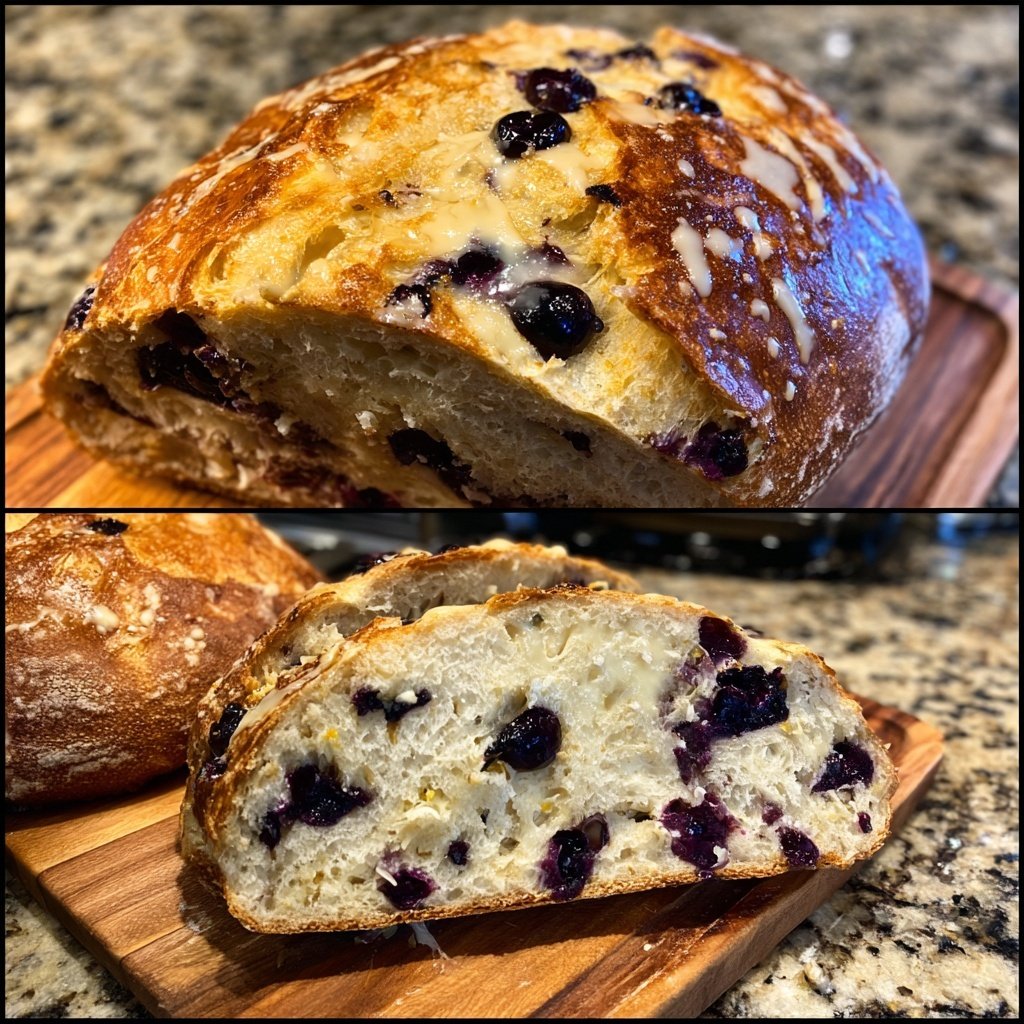
Watch for visual cues as your bread bakes—look for a deep golden crust and an internal temperature of around 200°F (93°C) when it’s done. Allow the bread to cool on a wire rack for at least an hour; this resting period helps set the crumb and enhances the flavor profile, allowing the blueberry and lemon notes to shine beautifully.
Storage Tips
To keep your Blueberry Lemon Sourdough Bread fresh, store it in a paper bag at room temperature for up to 3 days. This method prevents moisture buildup, which can lead to mold. If you want to store it longer, consider freezing it. Wrap the cooled loaf tightly in plastic wrap, followed by aluminum foil, and it can last up to 3 months in the freezer.
When ready to enjoy, thaw the bread at room temperature or pop slices straight into the toaster. This revitalizes the crust, making it taste freshly baked. Avoid refrigerating your sourdough, as it tends to dry out quickly in the fridge.
Serving Suggestions
Blueberry Lemon Sourdough Bread makes a delightful breakfast or snack option. Serve it toasted with a pat of butter or a spread of cream cheese for a rich treat. For a more indulgent breakfast, consider pairing it with lemon curd or a drizzle of honey; the sweetness complements the tart lemon flavor beautifully.
For a fresh twist, you could also turn this bread into French toast. Slice the cooled bread, dip it in a mixture of eggs, milk, and a touch of vanilla, then pan-fry until golden. Serve it with fresh blueberries and a sprinkle of powdered sugar for a brunch-worthy dish.
Troubleshooting Common Issues
If your sourdough bread doesn't rise adequately, the culprit may be an inactive starter or an overly cold environment during fermentation. Ensure your starter is at its peak before use and try to proof your dough in a warmer spot, like inside the oven with just the light on.
If your bread has a dense texture or large holes, it might be due to insufficient kneading or improper shaping. Ensure you knead the dough until it’s smooth and elastic, and practice your shaping technique to create a taut surface for better structure during baking.